If You Keep Skipping the Same Workout...
By Phil Ross, M.S.
Suppose you've got a familiar 20-minute home workout that's appropriate for you. You know what to do, and you keep planning to do it after work. Then Tuesday happens. A call runs long, one more task needs finishing, and by the time you close the computer, your evening responsibilities are already waiting.
You meant to exercise. You hadn't forgotten why it mattered. But the time you thought you had was gone, and now you're telling yourself, “I never stick with this.”
Look, before you give yourself another speech about discipline, I want you to go back to that evening. What actually pushed the workout out? You can care about doing it and still choose a time that keeps falling apart.
Let's find the part you can change before the next attempt. That gives you somewhere to start without throwing out a familiar routine or expecting tomorrow's workday to magically end on time.
Look at the Workout You Actually Missed
Go back to the last session you missed, not every workout you've ever skipped. When were you going to start, and what was happening then? Be specific enough that you can do something with the answer.
In our example, work ran late. The evening was already committed, and those responsibilities weren't going to disappear because you'd planned to exercise. You'd put the routine after a workday with no dependable finish time.
That's what happened. “I never stick with exercise” goes a lot further than that one evening can tell you. It also gives you very little to work with. Where would you put the next workout based on that sentence? Knowing that work regularly runs into your evening gives you a much better starting point.
You'd respond differently if you disliked the activity or needed someone to teach you how to do it. A change in your physical condition could call for individualized guidance. Those deserve attention, too, but they aren't the obstacle we've identified here.
You still want this routine in your life. For this person, the immediate problem is giving it whatever time happens to remain after work, when the evening already has demands of its own.
Change One Part of the Next Attempt
Let's give that same workout a different time. Suppose the next Tuesday is a work-from-home day, with an earlier lunch period that looks available. Check it before putting the routine there. A blank calendar square doesn't tell you whether a meeting usually runs over or something else needs doing during that break.
Look at the whole lunch period, including time to get ready and return to work. In this example, there appears to be enough room around the familiar 20-minute routine. The same home workout stays in place, with its usual requirements. You're changing when you do it.
I'd put a short note in the calendar. For our hypothetical reader, it could say:
- Last time: Work ran late and the evening had no usable room left.
- Next attempt: Tuesday during the earlier lunch window I've already checked.
- Afterward: Did this time let me start the routine and fit it into the day without the usual evening conflict?
Now you've got something you can actually try. You haven't promised a perfect week or changed the whole workout. You've chosen one opening worth checking in practice. Those 20 minutes belong to this person's existing routine, not a requirement for yours.
Let the Next Attempt Tell You Something
Suppose that next Tuesday arrives and the lunch break is still available. You start the same familiar home routine without waiting to see when work will finish that evening. Good, that's the part you were trying to change.
But getting ready takes more of the break than you expected. There's room for the routine in the lunch period, but the setup needs to happen before the part you've set aside for the workout begins. You notice how tight the return to work would be if you left it that late again.
Give those minutes a place in the plan. Getting ready and returning to work both take time, even when the movement itself fits. Don't rush the routine, answer messages through it, or skip preparation to make the calendar look right. Keep the technique and recovery guidance you already follow. There's no missed session to make up for here.
One sentence afterward is enough: “Lunch worked better than after work, but I need the setup ready before the window starts.” That's something you can use next time. The earlier timing got you past the evening conflict, and now you know where the preparation needs to go.
Decide What Deserves Another Try
I'd give that earlier time another try on a comparable work-from-home day. Check the obligations around it again and have the normal setup ready before the workout portion begins. Keep what helped and account for what you noticed.
One Tuesday tells you about one Tuesday. It doesn't reserve lunchtime for the rest of your life. If a meeting or another responsibility takes that break next time, choose an opening that's actually available. There's no benefit in repeatedly writing down a time you already know you can't use.
For someone else, the difficulty might be the location, the company, or simply not liking the activity. It depends on the person. We've kept this example focused on timing so you can see what changed and what you'd do with that information.
A larger change in health, responsibilities, or available support may require a broader adjustment. You don't have to preserve the original plan just because you wrote it down. I want you to find something workable, not spend the week defending Tuesday's calendar entry.
Write down the next realistic lunch opportunity you've checked, along with the condition this example revealed: have the usual setup ready before the workout window begins.
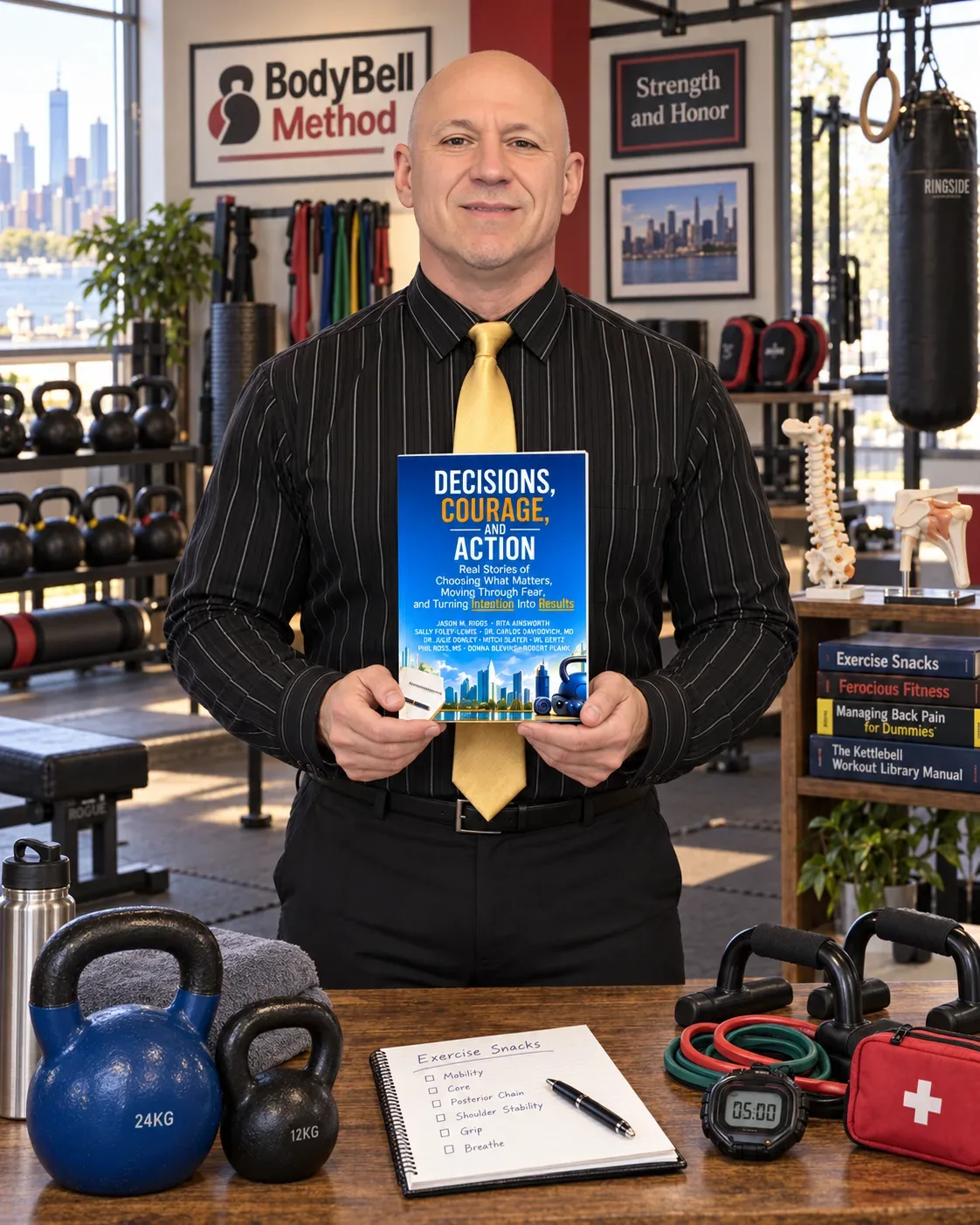
I care about what you want to stay able to do, whether that's carrying groceries, getting up from the floor, or helping someone who needs you. In “The Hidden Core,” my chapter in Decisions, Courage, and Action, I discuss strength, mobility, control, and training for a life you can keep participating in.
Donna Blevins brings another useful perspective in “Three Small Wins.” An unsuccessful attempt doesn't have to become a permanent description of yourself. Look at what happened closely enough to decide what to do next. You can be honest about a missed session without declaring that you'll never follow through.
For more on physical capability and the everyday decisions behind following through, explore Decisions, Courage, and Action.
About the Author
Phil Ross, M.S., is a martial artist, fitness coach, author, and creator of the BodyBell Method®. His work focuses on helping people build practical strength, improve mobility, and remain physically capable for the demands of everyday life. He has spent decades teaching martial arts, strength training, and movement to people at different ages and ability levels. Learn more at PhilRoss.com.