Explore Articles & Insights

Discover valuable content across health, lifestyle, wellness and more.
Use filters or search by keywords, category, subcategory, hashtags, or content.

Motor Function and Brain Disruption: CTE & Concussions

Motor Function and Brain Disruption: CTE & ConcussionsThere are a host of events that can disrupt the motor function of the brain. Our central nervous system, CNS, is the center of all motor function and is comprised of the brain and the spinal cord. All of the feedback and feedforward information from the PNS, peripheral nervous system, is sent, interpreted and addressed in the CNS (Powers & Howely, 2015). When there are disruptions to these systems, motor function, speech, thought and even death can result. There are many conditions that result in brain dysfunction. Concussions are a very hot topic of late. The movie Concussion, starring Will Smith as Dr. Bennet Omalu and his findings upon the autopsy of former All Pro NFL Center Mike Webster of the Pittsburgh Steelers sparked a series of autopsies and studies to be conducted on TBI or Traumatic Brain Injuries. There are several causes of TBI’s and unfortunately many of them go unreported and/or very little is done in the manner of follow-up after the patient leaves the hospital. Additionally, especially with sports related head trauma, the athletes tend to minimize or attempt to hide the occurrence in fear of losing playing or practice time. This is evidenced in the findings of a study conducted on college football players and a healthy control group. The repeated trauma to the head resulted in a 25% hippocampal volume reduction in the college football players vs. the healthy non-athletes (Fine, 2014). Not only is football a culprit, but according the studies reported by the American Association of Neurological Surgeon, football is second to cycling with hockey and horseback riding offering up substantial numbers as well. There is also another consideration, dehydration and its effect on head trauma. When I was coaching a high school wrestling team, we had a rash of concussions one year and which prompted me to delve into the concussion protocol and subsequently discovered a few interesting facts. Dehydration and the snapping of the head placed a great deal of stress on the brain. Prior to this, we’d see concussions caused by a wrestler getting accidently kneed in the head or both wrestlers head butting each other by mistake. This coupled with the brain’s response to long bouts of exercise affected the motor response of the body (Powers, Howely, 2015 pg. 153). Dehydration as a result of weight cutting or over exercising can lead to the loss of cerebral fluid and reduce the amount of cushioning to the brain and foster a condition of the brain becoming more susceptible to trauma. There data collection and concussion protocol are in their infancy and much more research needs to be done. All athletes should be subject to testing of motor and cognitive skills prior to competition so a baseline of brain function is set. This is the only true way to know how much they have been affected by the brain trauma. References:Weber, Amanda Friedline, et al. Journal of Athletic Training 2013;48(2):153–160 doi: 10.4085/1062-6050-48.1.07 by the National Athletic Trainers’ Association, Inc www.natajournals.org Mar/Apr 2013, Vol 48, No. 2, pp 153-160Maron, Dina Fine. A Generation Losses Consciousness, and Grows More Consciousness of Headbanging. May 13, 2014Powers, Scott K., and Howley, Edward T. Exercise Physiology, Theory of Application and Performance. 9th ed. New York: McGraw-Hill, 2015. American Association of Neurological Surgeons. Sports-related Head Injury. 5550 Meadowbrook Drive Rolling Meadows, IL 60008-3852 P 847.378.0500 or 888.566.AANS (2267) F 847.378.0600 Email: info@aans.org. 2017

Motivation and Changing Behavior

Motivation and Changing BehaviorMotivation for Age Group/Gender: 38-year-old female Fitness level, reasons for training, program, fears, lifestyle, etc: The client described above was had participated in fitness and kettlebell-based training classes previously with an instructor from Russia. She had a reasonable level of fitness, but had taken 4 months off from her training. Plus, having come from training with someone from Russia in kettlebells (and being of Russian descent herself), she was apprehensive about training in Russian kettlebells with an American. Her goals are strength, conditioning, mobility, flexibility and to achieve a total body workout in a challenging, yet encouraging environment. Her fears and doubts were addressed with our introductory special. She tried out the classes and we provided her with top shelf instruction. We employ the Hardstyle Kettlebell System of training and demonstrated that all of her needs and goals would be met with our programming that provides all of the wave loading and periodization for her. We have addressed her needs and she continually improves and signed on as a full member several month ago. Age and gender can have a profound effect on what type of motivation is required. The motivation for an athlete may be revolved around increasing their performance in their given sport. An adult may want to lower their blood pressure and lower their LDL level, whereas a middle aged individual may want to simply be able to move better. The challenge of the coach or trainer is to first identify the needs and secondly to address them. Goals change over time and it’s great to witness. Clients will come in looking to “shed a few pounds” and after three to six months, their challenging themselves with the size of the kettlebell or how many tactical pull-ups they can perform. In this stage they are consistently adding to their goals and have entered into the state of self efficacy. The training becomes part of them and begins to be part of what defines them. Changing Behavior: At this point in my life I do not engage in any bad habits, but this was not always the case. When I was in college I used chewing tobacco as a means to keep me occupied while losing weight for wrestling. I was addicted and “dipped” daily for at least a decade upon my graduation from college. My father was overweight and we made a deal with each other; I’d stop chewing tobacco and he’d lose the 80 pounds that he needed to achieve a healthy weight. I was able to quit cold turkey and my father was not able to lose the necessary weight and met his demise 15 years ago. Behavior: Chewing TobaccoShort Term Benefits/Risks: Feels good, catch a buzz and suppresses appetite. Sores in the mouth, yellow teeth and bad breath. Long Term Benefits/Risks: Stomach, throat and mouth irritation and cancer risks are significantly increased. The cost of a tin of tobacco has risen dramatically making its use fiscally unattractive. There are no long term benefits to using tobacco of any kind.Changing behaviors is not an easy task, especially when the behavior involves an addictive substance. There needs to be continued motivation adopted by the participant to be successful. A good support network in tantamount to the success of the change. If others in your circle are participating in the behavior that one wishes to change, the task becomes even more difficult to achieve. Reference:Bryant, C. X., Ph.D., & Green, D. J. (2012). Essentials of Exercise Science for Fitness Professionals. American Council on Exercise. ISBN 9781890720315. 4851 Paramount Drive, San Diego, CA, 92123

Functional Medicine in Wasilla AK

Functional medicine in Wasilla AK is a patient-centered, science-based approach to healthcare that seeks to identify and address the root causes of disease. Instead of focusing solely on symptoms, functional medicine practitioners analyze how genetics, environment, and lifestyle factors contribute to an individual's overall health. Key Principles of Functional Medicine in Wasilla AK Personalized Care: Treatment is tailored to the unique needs of each patient rather than applying a one-size-fits-all approach. Root Cause Resolution: Rather than merely treating symptoms, functional medicine aims to uncover and address underlying causes of illness. Whole-Body Approach: Recognizes that all systems in the body are interconnected and considers how imbalances in one area affect overall health. Evidence-Based Practices: Utilizes the latest scientific research and diagnostic tools to develop effective treatment plans. Lifestyle and Prevention Focus: Encourages lifestyle changes, such as nutrition, exercise, stress management, and sleep optimization, to improve health and prevent disease. How Functional Medicine Works Comprehensive Assessment: Functional medicine practitioners conduct an in-depth analysis of medical history, genetics, lifestyle, and environmental exposures. Advanced Testing: Specialized lab tests may be used to assess biomarkers, gut health, hormone levels, and other physiological functions. Personalized Treatment Plan: Based on test results, practitioners develop a customized plan that may include dietary modifications, supplementation, exercise, and stress-reducing techniques. Ongoing Monitoring and Adjustment: Treatment is continuously adjusted based on patient progress and evolving health needs. Common Conditions Helped with Functional Medicine Digestive disorders (IBS, Crohn’s disease, food sensitivities) Autoimmune diseases (Hashimoto’s, rheumatoid arthritis, lupus) Hormonal imbalances (thyroid disorders, adrenal dysfunction, menopause) Chronic fatigue and fibromyalgia Metabolic conditions (diabetes, obesity, cardiovascular disease) Neurological issues (migraines, anxiety, depression, cognitive decline) Why Choose Functional Medicine? Functional medicine empowers patients by providing them with the knowledge and tools to take control of their health. By addressing root causes and promoting long-term wellness, this approach helps individuals achieve sustainable health improvements and a better quality of life.

Red Light Therapy in Wasilla AK

In recent years, there has been a surge of interest in alternative therapies for various health conditions, and one that has gained considerable attention is red light therapy (RLT) in Wasilla AK. Also known as low-level laser therapy (LLLT) or photobiomodulation (PBM), red light therapy involves exposing the body to low levels of red or near-infrared light. While it may sound like something out of a science fiction novel, the therapeutic potential of red light has been extensively studied and is increasingly being recognized by medical professionals. Let's delve into the fascinating world of red light therapy, exploring its mechanisms, benefits, and applications. Understanding Red Light Therapy Offered in Wasilla AK Red light therapy operates on the principle of photobiomodulation, which involves using specific wavelengths of light to stimulate cellular function. Unlike ultraviolet (UV) light, which can be harmful in high doses, red and near-infrared light have longer wavelengths and lower energy levels, making them safe for therapeutic use. These wavelengths penetrate the skin and are absorbed by cells, where they trigger various biological responses. Mechanisms of Action The precise mechanisms by which red light therapy exerts its therapeutic effects are not fully understood, but researchers have proposed several theories. One prominent hypothesis is that red and near-infrared light stimulate the mitochondria, the powerhouse of the cell, to produce more adenosine triphosphate (ATP), the molecule that provides energy for cellular processes. This increased ATP production can enhance cellular metabolism and promote tissue repair and regeneration. Additionally, red light therapy has been shown to modulate inflammation and oxidative stress, two processes that play crucial roles in many chronic diseases and conditions. By reducing inflammation and oxidative damage, red light therapy may help alleviate symptoms and promote healing in various tissues throughout the body. Benefits of Red Light Therapy in Wasilla AK The potential benefits of red light therapy are diverse and far-reaching, encompassing both physical and mental health. While research is ongoing, preliminary studies and anecdotal evidence suggest that red light therapy may offer the following advantages: Physical Benefits: Accelerated wound healing: Red light therapy has been shown to promote the healing of wounds, cuts, and surgical incisions by enhancing cellular repair mechanisms. Pain relief: Many individuals report reductions in pain and discomfort after undergoing red light therapy sessions, making it a promising option for managing chronic pain conditions. Improved skin health: Red light therapy is commonly used in dermatology for its ability to stimulate collagen production, reduce wrinkles and fine lines, and improve overall skin tone and texture. Enhanced athletic performance: Some athletes incorporate red light therapy into their training regimens to speed up recovery, reduce muscle soreness, and improve physical performance. Mental Health Benefits: Mood enhancement: Preliminary research suggests that red light therapy may have antidepressant effects by modulating neurotransmitter levels and promoting neurogenesis (the growth of new brain cells). Stress reduction: Exposure to red light may help lower levels of cortisol, the stress hormone, leading to feelings of relaxation and calmness. Improved sleep quality: By regulating circadian rhythms and promoting the production of melatonin, the hormone that regulates sleep-wake cycles, red light therapy may help individuals achieve better sleep. Applications of Red Light Therapy Red light therapy can be administered in various settings, including clinics, spas, and even in the comfort of your own home with the use of specialized devices. Some common applications of red light therapy include: Dermatology: Red light therapy is widely used in dermatology for treating acne, eczema, psoriasis, and other skin conditions. It can also help reduce the appearance of scars, stretch marks, and cellulite. Pain management: Many physiotherapy clinics and pain management centers offer red light therapy as a non-invasive option for relieving pain associated with arthritis, fibromyalgia, sports injuries, and other musculoskeletal disorders. Anti-aging treatments: As mentioned earlier, red light therapy is valued for its ability to rejuvenate the skin and combat the signs of aging. It is often used in conjunction with other cosmetic procedures to enhance results. Sports medicine: Professional athletes and fitness enthusiasts may use red light therapy to accelerate recovery from injuries, reduce inflammation, and improve muscle performance and endurance.

So how does your Wasilla AK chiropractors' education compare to other health care professionals?

After reading the above information, I feel it is safe to say that your chiropractic doctor knows far more about your health than just treating your back. To help understand this it is useful to compare a chiropractor’s education to other members of the health care community. Since many people are familiar with a medical doctor, we will compare their educational background with that of a chiropractic doctor. For starters, the typical chiropractic student will have completed a total of approximately 2,419 hours of academic work prior to the initiation of clinical studies. In comparison, the majority of medical students will have completed somewhere around 2,047 hours of study. Further, while each health care discipline has its strengths, chiropractic students undergo more hours of study in the fields of anatomy, embryology, physiology, biochemistry, diagnosis, x-ray, and orthopedics. In contrast, medical practitioners have had more classroom hours studying the subjects of pathology, psychology, and obstetrics. When analyzing these numbers it is important to understand that while differences exist, each of your doctors has undertaken and completed a similar core education. In addition, it is important to remember that each of your doctors (even in the same healthcare discipline) possesses various strengths to compensate for other healthcare professionals' weaknesses and utilize a different approach to healing the body. In the end, finding a doctor that understands your needs and has the tools to provide you with the most appropriate care is what is important. At Arctic Chiropractic West Mat-Su our team is here to help answer your questions. Please feel free to contact us today.

The Educational Requirements For A Chiropractor

As with many professionals, the specific requirements outlined often vary from state to state. Typically, chiropractors are required to have completed undergraduate pre-medical studies and obtained a bachelor’s degree prior to admission to a post-graduate chiropractic college. Each chiropractic college has undergone a meticulous evaluation process to become certified by the Department of Education as an accredited educational institution. The amount of time that your chiropractic doctor spends at a specific chiropractic academic institution is impressive. In fact, your chiropractor has spent a minimum of 4,200 hours at a chiropractic college prior to receiving his diploma. This time is spent in the classroom, laboratory, and clinic learning about the various aspects of the chiropractic profession and health care in general. In the classroom, your doctor focuses his studies on the subjects of anatomy, physiology, diagnosis, pathology, biochemistry, neuromuscular and orthopedic evaluation, pediatric and geriatric care, microbiology, nutrition, immunology, radiology, philosophy, and clinical research. While this may seem like a lot, all of this information is assimilated and tested prior to advancement to clinical work. Once the student has completed his academic work, he will typically spend a minimum of 1,000 hours at a campus clinic under the guidance of a clinic doctor. During this time he will learn hands-on how to diagnose and care for patients in real clinical situations. During your chiropractors' education, they will be tested through a number of different evaluations. Not only is your doctor subject to evaluation by their chiropractic college, they must also pass a series of national board examinations. Chiropractors practicing in the United States are required to have passed a series of four national board exams which evaluate them on their understanding of the basic sciences, clinical sciences, physiological therapeutics, diagnostic imaging, case management, and clinical competency. In addition to these requirements, following graduation and completion of national board examinations, each chiropractor must become certified by their state licensing agency. The completion of these standards is not the end of the educational journey for chiropractic doctors. Depending on the state, each chiropractor is required to complete additional approved course work at designated times following their licensure. For example, Wisconsin requires a minimum of 40 hours of continuing education every two years following graduation.

Unleash Your Gym's Growth Engine: Daily Sales Training That Boosts Sales 20%! Imagine closing one extra sale every day.

Imagine this: every single day, you walk away with an extra sale. Not just any sale, but a sale that fuels your gym’s growth, strengthens your community, and brings you closer to achieving your fitness business goals. Sounds too good to be true, right? Wrong. As a gym business consultant, I’m here to tell you that the key to unlocking this sales superpower lies in daily sales training. Now, before you glaze over and think “Ugh, more meetings!”, hear me out. Daily sales training doesn’t have to be a boring lecture. It’s about quick, impactful micro-sessions that equip your team with the tools and mindset to consistently convert leads into loyal members. Why Daily Doses of Sales Training Are a Game Changer: Sharpened Saw, Smoother Sales: Regular training keeps your team’s sales skills sharp, ensuring they can overcome objections, identify member needs, and close deals with confidence. Knowledge is Power: Daily doses of industry trends, competitor insights, and effective sales techniques empower your team to stay ahead of the curve and stand out from the competition. Motivation Matters: Brief but inspiring training sessions keep your team energized and motivated, fostering a culture of continuous improvement and goal achievement. Consistency is King: Small, daily bursts of training are more effective than sporadic workshops. They solidify knowledge, build momentum, and make sales success a daily habit. But It Gets Even Better: My experience working with gyms across the country has shown that implementing daily sales training can lead to an average increase of one sale per day. That’s a 20% boost in sales every month, simply by investing 15-20 minutes a day in your team’s development. Ready to Turn Up the Sales Volume? Here’s how to get started: Keep it Short & Sweet: Focus on one key topic or technique per session. Bite-sized learning is easier to digest and apply. Mix it Up: Include role-playing, guest speakers, video tutorials, and interactive exercises to keep things engaging. Data-Driven Decisions: Track your sales metrics and use them to tailor your training to areas that need improvement. Celebrate Success: Recognize and reward your team’s achievements to keep them motivated and on track. Remember, sales training isn’t a one-time event, it’s an ongoing process. By making daily training a priority, you’re investing in the future of your gym, your team, and your bottom line. So, what are you waiting for? Start fueling your sales success today! I challenge you to implement daily sales training for just one month and see the impact for yourself. I guarantee you won’t be disappointed! Contact Jim Here. Click here for more details on financing options or call 214-629-7223 or email jthomas@fmconsulting.net for more information. Or, apply now. If your fitness business is in need of a turnaround, a boost in sales, or a fresh marketing approach, we’re here to help. We offer a free initial consultation to discuss your specific situation and explore how our expertise can make a difference. Don’t hesitate to reach out to Jim Thomas at 214-629-7223 or find valuable insights on YouTube. An Outsourced CEO, Turnaround Expert and Author, Jim Thomas is the founder and president of FMC USA Inc., a management consulting, turnaround, financing and brokerage firm specializing in the leisure services industry. With more than 25 years of experience owning, operating and managing facilities of all sizes, Thomas lectures and delivers seminars, webinars and workshops across the globe on the practical skills required to successfully overcome obscurity, improve gym sales, build teamwork and market fitness programs and products. Visit his Web site at: www.fmconsulting.net or www.youtube.com/gymconsultant.

Gym Owners & Salespeople: Transform Your Pitch, Supercharge Your Sales! Struggling to convert leads? Ditch the flat sales routine and join our high-impact workout for your gym sales game.

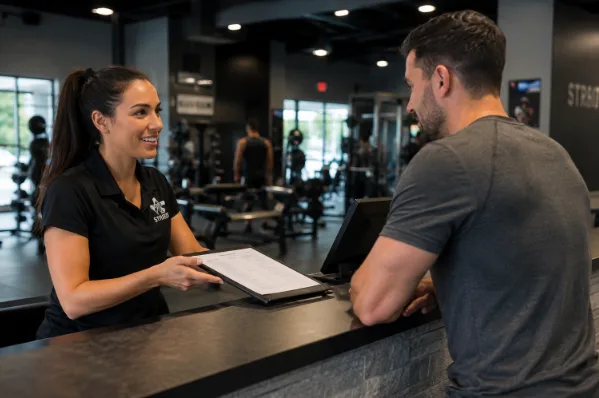
Gym owners and salespeople, assemble! Are you tired of sales pitches falling flat like a deflated yoga ball? Fear not, fitness warriors! Today, we’re shredding the ineffective routines and crafting a high-impact workout for your sales game. But first, let’s clear the air: can you confidently answer YES to this question throughout your day? “What are some common things we do that WON’T result in a sale, and how can we transform them into sales-generating strategies?” If not, grab your metaphorical protein shaker and buckle up! We’re diving deep into the hidden saboteurs of your sales success and revealing the power moves to flip the script. ❌ Common Culprits Crushing Your Sales: The Generic Greeting: “Can I help you?” is stale bread, not a warm welcome. Personalize greetings, identify needs, and spark a conversation. Feature Fatigue: Don’t just rattle off features – connect them to benefits! Show how your gym solves their pain points and fuels their fitness dreams. Passive Listening: It’s not about YOU talking, it’s about understanding THEM. Actively listen, uncover their motivations, and tailor your pitch accordingly. The Pressure Play: Don’t strong-arm your way to a sale. Offer value, build trust, and let them make an informed decision they’ll feel good about. ** Power Moves to Pump Up Your Sales:** Become a Fitness Detective: Ask open-ended questions to uncover their goals, challenges, and preferences. Be their fitness consultant, not just a salesperson. Paint a Personalized Picture: Use their answers to craft a compelling vision of how your gym will help them achieve their unique fitness goals. Show, Don’t Just Tell: Offer free trial classes, personalized consultations, or gym tours to let them experience the magic firsthand. Become a Social Media Superhero: Engage with your community, share success stories, and showcase the vibrant atmosphere of your gym online. Offer Irresistible Incentives: Create limited-time promotions, referral programs, or special packages that add value and entice them to join. Remember, selling isn’t about pushing products, it’s about building relationships and providing solutions. Make every interaction meaningful, personalized, and value-driven, and watch your sales soar like a perfectly executed squat. Bonus Tip: Share your sales struggles and success stories in the comments below! Let’s build a community of gym sales champions who support and inspire each other. Now go forth, conquer the market, and make those sales legendary! Click here for more details on financing options or call 214-629-7223 or email jthomas@fmconsulting.net for more information. Or, apply now. If your fitness business is in need of a turnaround, a boost in sales, or a fresh marketing approach, we’re here to help. We offer a free initial consultation to discuss your specific situation and explore how our expertise can make a difference. Don’t hesitate to reach out to Jim Thomas at 214-629-7223 or find valuable insights on YouTube. An Outsourced CEO, Turnaround Expert and Author, Jim Thomas is the founder and president of FMC USA Inc., a management consulting, turnaround, financing and brokerage firm specializing in the leisure services industry. With more than 25 years of experience owning, operating and managing facilities of all sizes, Thomas lectures and delivers seminars, webinars and workshops across the globe on the practical skills required to successfully overcome obscurity, improve gym sales, build teamwork and market fitness programs and products. Visit his Web site at: www.fmconsulting.net or www.youtube.com/gymconsultant.

February Fitness Frenzy: Turn Your Gym's January Slump into Success! Feeling the pinch after a lackluster January? You're not alone.

Gym owners, feeling the pinch after a lackluster January? You’re not alone. While New Year’s resolutions bring a surge, they often fizzle faster than a poorly mixed protein shake. But instead of waiting for things to improve magically, let’s TURN UP the volume on your success! First, let’s diagnose the January slump: Did you rely on hope, not hustle? Remember, sales require proactive action, not passive wishes. Did you wait for leads to magically appear, or actively pursue them with targeted strategies? Sales basics forgotten? Effective communication, objection handling, and understanding member needs are crucial weapons in your arsenal. Did your team brush up on these fundamentals before diving into January’s rush? Stuck in autopilot? Innovation fuels growth. Did you experiment with new marketing channels, class formats, or community initiatives to attract attention? Now, let’s unleash your February fitness frenzy: 1. Re-energize your sales force: Invest in sales training and coaching. Hone their communication skills, objection handling techniques, and ability to connect with potential members on a deeper level. Remember, empowered salespeople = empowered business. 2. Don’t wait, create!: Ditch the passive approach. Implement targeted marketing campaigns on social media, partner with local businesses, and host engaging events to generate buzz and leads. Let the world know what makes your gym THE place to be. 3. Redefine “value”: Move beyond discounts and freebies. Highlight the intangible benefits of your gym – the supportive community, expert guidance, and life-changing transformations you offer. Show, don’t just tell, through powerful testimonials and member success stories. 4. Get personal: Don’t treat everyone the same. Segment your audience and tailor your message to their specific needs and aspirations. Young professionals crave convenience, families seek childcare options, and fitness enthusiasts hunger for challenging workouts. Speak their language! 5. Embrace technology: Utilize automated lead generation tools, email marketing campaigns, and social media engagement strategies. Make it easy for potential members to connect with you, learn about your offerings, and join your fitness family. 6. Community is key: Foster a welcoming and supportive environment beyond just the gym floor. Organize social events, partner with local charities, and create a space where people connect and feel valued. Remember, strong communities breed loyalty and referrals. 7. Track and adapt: Don’t just throw darts in the dark. Monitor your efforts, analyze results, and adapt your strategies based on what resonates with your audience. Data is your guide to continuous improvement. Remember, February is your opportunity to rewrite the narrative. By investing in your sales team, embracing proactive marketing, and focusing on the true value you offer, you can transform your gym from a January slump to a thriving fitness hub. So, grab your metaphorical dumbbells, rally your team, and get ready to dominate February! Contact Jim Here. P.S. Share your turnaround tips and success stories in the comments below! Together, we can empower gym owners around the world to achieve their fitness business dreams. Click here for more details on financing options or call 214-629-7223 or email jthomas@fmconsulting.net for more information. Or, apply now. If your fitness business is in need of a turnaround, a boost in sales, or a fresh marketing approach, we’re here to help. We offer a free initial consultation to discuss your specific situation and explore how our expertise can make a difference. Don’t hesitate to reach out to Jim Thomas at 214-629-7223 or find valuable insights on YouTube. An Outsourced CEO, Turnaround Expert and Author, Jim Thomas is the founder and president of FMC USA Inc., a management consulting, turnaround, financing and brokerage firm specializing in the leisure services industry. With more than 25 years of experience owning, operating and managing facilities of all sizes, Thomas lectures and delivers seminars, webinars and workshops across the globe on the practical skills required to successfully overcome obscurity, improve gym sales, build teamwork and market fitness programs and products. Visit his Web site at: www.fmconsulting.net or www.youtube.com/gymconsultant.