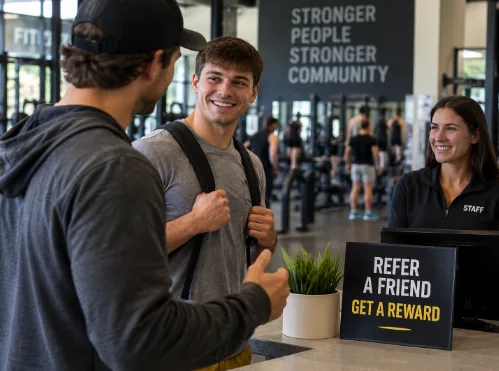
Most gyms have a referral program.
But most gym referral programs have one major flaw:
They only allow—or only actively encourage—current members to participate.
Think about that for a minute.
You have former members, former personal training clients, friends of members, parents, spouses, local business owners, social media followers, vendors, employees, past prospects, and hundreds or even thousands of people throughout your community who may know someone looking for a gym.
Yet most clubs never give those people a reason to make an introduction.
In my opinion, that is a huge missed opportunity.
I've seen gym owners spend thousands of dollars trying to generate another Facebook lead, Google lead, direct-mail response, or online inquiry while completely ignoring people who already know their name, know their facility, or have had some type of relationship with the business.
Allowing non-members to participate in your referral program could become an entirely new lead-generation channel for your gym.
And it doesn't have to be complicated.
The Short Answer: Should Gyms Allow Non-Members to Refer New Members?
Yes. A gym can dramatically expand its referral reach by allowing former members and other people in the community to refer prospects in exchange for merchandise, gift cards, free access, membership credits, prizes, or other incentives.
Instead of limiting your referral program to the people currently paying you, you essentially turn your entire community into potential ambassadors for your business.
That's the game changer.
Most Gyms Are Fishing in Too Small a Pond
The traditional gym referral promotion looks something like this:
Refer a friend and receive a free month.
That's fine.
You should absolutely market referrals to your current members.
But why stop there?
If you have 1,000 active members, you have 1,000 potential referral sources.
What if you've had another 4,000 members come through your doors during the past several years?
Suddenly your potential referral audience becomes much larger.
Now add:
- Former personal training clients
- Former prospects
- Friends and family of members
- Local residents
- Business owners
- Vendors
- Social media followers
- Coaches and trainers
- Parents of younger members
- People who attended previous events
- People who simply like your gym but aren't members
Your referral program is no longer just a member referral program.
It becomes a community referral program.
That is a completely different way of looking at referrals.
Former Members May Be One of Your Most Overlooked Assets
This is the group I believe gym owners should really think about.
When somebody cancels their membership, we often mentally remove them from the business.
They're gone.
They're no longer producing monthly dues.
Move on.
I think that's a mistake.
A former member may still think very highly of your gym.
Maybe they moved.
Maybe their work schedule changed.
Maybe they built a home gym.
Maybe finances became tight.
Maybe they started working out somewhere closer to home.
None of that necessarily means they stopped liking your business.
And they may still know five, ten, or twenty people who could be potential members.
So why wouldn't we continue communicating with them?
Imagine sending former members a message:
“You don't have to be a member to refer someone to us. Send a friend our way, and we'll send you a free gift.”
Now you've given someone who hasn't paid you in two years a reason to start talking about your gym again.
That can be incredibly powerful.
Give Non-Members Something Worth Talking About
The incentive doesn't necessarily need to be cash.
In fact, sometimes something connected to your brand can be even better.
A former member could earn:
- One referral: gym T-shirt or merchandise.
- Two referrals: complimentary week or month.
- Three referrals: premium merchandise package.
- Five referrals: several months of membership.
- Ten successful referrals: possibly a free year.
You could also use local restaurant gift cards, massage certificates, training sessions, recovery services, event tickets, supplements, branded apparel, or other rewards that make sense for your business.
The important part is creating an incentive people actually care about.
And here's another benefit:
A former member who earns free gym time may walk back through your doors.
Once they're back inside your facility, you potentially have an opportunity to win them back as a paying member.
So one referral program could accomplish two things:
Acquire a new member and reactivate a former one.
That's a pretty attractive equation.
“Refer Somebody Over and We Have a Free Gift for You”
Sometimes gym owners overcomplicate marketing.
The offer doesn't need twelve rules and a three-page explanation.
It can literally be:
Know someone looking for a gym? Refer them to us. You don't need to be a member. If they join, we've got a free gift for you.
That's easy to understand.
It also creates curiosity.
“What do I get?”
Now you have an opportunity to start a conversation.
Your referral landing page, front desk signage, emails, text messages, website, Facebook page, Instagram account, and community partnerships can all reinforce the same message.
Anyone can refer.
That's the distinction.
Stop Treating Referrals Like a One-Time Promotion
This is another mistake I see.
A gym runs a "Refer a Friend" promotion for two weeks.
Then it's gone.
Three months later they do another one.
Why?
Referrals shouldn't necessarily be a promotion.
They can be a permanent acquisition channel.
Every person who walks through your business should understand:
We reward people who introduce good people to our gym.
Members know it.
Former members know it.
Employees know it.
Vendors know it.
Local businesses know it.
Social media followers know it.
The surrounding community knows it.
Now you've built a referral culture rather than another short-term promotion.
Your Former Member Database Has Value
Gym owners sometimes tell me they need more leads.
One of the first questions I would ask is:
How many people are already sitting in your database?
There may be thousands.
And most haven't heard from the gym in months or years.
You spent money acquiring many of those people originally.
Why wouldn't you continue marketing to them?
Instead of only sending:
“Come back for $0 enrollment.”
Try something different.
“Even if you're not ready to come back, we'd still love your help growing our community. Refer someone who joins and we'll reward you.”
That gives former members a reason to engage even when they have no interest in rejoining themselves.
And here's what I see all the time in this industry:
Gym owners are constantly looking for the next lead source while sitting on lead sources they already paid to acquire.
Your former member list is one of them.
Turn Local Businesses Into Referral Partners
The concept doesn't stop with former members.
Think bigger.
Your local:
- Chiropractor
- Physical therapist
- Massage therapist
- Hair salon
- Restaurant
- Insurance agent
- Realtor
- Apartment complex
- Nutritionist
- Sporting goods store
- Youth sports organization
- Corporate employer
could all potentially refer people into your facility.
Maybe the referring business earns free gym passes for its employees.
Maybe it receives merchandise.
Maybe you create reciprocal promotions.
Maybe you donate something to a local charity after a certain number of referrals.
The exact reward matters less than creating a system where people outside your membership base have a reason to recommend your gym.
Track Everything
There is one important operational piece.
You need to know where referrals are coming from.
Every referral should have a source attached.
Ask every prospect:
“Who can we thank for referring you?”
Track:
- Referrer
- Prospect
- Appointment
- Show
- Sale
- Revenue generated
- Reward issued
Over time, you may discover something very interesting.
You may have certain former members, businesses, trainers, or community members who become tremendous referral sources.
Those people deserve extra attention.
If somebody sends you six new members over a year, they're not just a former member anymore.
They're practically a marketing partner.
Treat them accordingly.
Make Your Best Referrers Famous
Recognition can sometimes be just as motivating as the reward itself.
Create a referral leaderboard.
Recognize your “Referral Partner of the Month.”
Post photos of people receiving their rewards.
Celebrate somebody who earned a free year.
Send handwritten thank-you cards.
Feature top referral partners on social media.
People enjoy being recognized.
More importantly, every time you publicly recognize somebody for referring, you're reminding everyone else:
“Oh yeah. I can do that too.”
That's marketing inside your marketing.
One Rule: Make Sure the Economics Work
Don't randomly start handing out expensive rewards.
Know your numbers.
If your average new member is worth $500, $1,000, $1,500, or more during their relationship with your business, what would you comfortably pay to acquire that customer?
That's the number that matters.
If you're willing to spend $100 acquiring a lead through advertising, spending $50, $75, or $100 rewarding someone who sends you an actual paying customer may make tremendous economic sense.
The referral reward should be based on the value of the customer being acquired.
Not guesswork.
The Bigger Lesson: Everybody Can Become a Salesperson for Your Gym
The greatest marketing campaigns don't always require bigger advertising budgets.
Sometimes they require looking differently at the relationships you already have.
Your current members should absolutely refer.
But so can former members.
So can former clients.
So can parents.
So can spouses.
So can local businesses.
So can vendors.
So can your social media audience.
So can someone who toured your club six months ago and never joined.
If they know somebody who needs what you offer, why wouldn't you give them a reason to make the introduction?
The gym industry has traditionally thought of referral programs as something we market to the active membership base.
I believe we should expand that thinking.
Turn your referral program into a community-wide customer acquisition program.
Because your next great salesperson might not work for you.
They might not even belong to your gym.
They may simply be somebody who knows someone who needs you.
And sometimes all you have to do is give them a reason to make the introduction.
Frequently Asked Questions
Can non-members refer people to a gym?
Yes. A gym can create a referral program that rewards members, former members, local residents, businesses, and other community contacts for referring qualified prospects or new customers.
What should a gym give someone for a referral?
Possible referral rewards include branded merchandise, complimentary membership time, personal training sessions, gift cards, recovery services, local-business rewards, special experiences, or larger prizes for multiple successful referrals.
Should former gym members be included in referral promotions?
Absolutely. Former members already know the brand and may still have a positive relationship with the facility even if they no longer use it. They can become a valuable source of new referrals and, in some cases, the referral reward can help reactivate them as members.
How can gyms get more referrals?
Make the program simple, continuously promote it, allow more people to participate, create attractive rewards, recognize successful referrers, regularly communicate with former members, establish local business partnerships, and track every referral source.
Should a gym referral program run year-round?
In most cases, yes. Rather than relying exclusively on occasional referral promotions, gyms can create an ongoing referral system that becomes a permanent customer acquisition channel.
How should a gym measure its referral program?
Track referrals generated, appointments booked, show rates, memberships sold, revenue generated, rewards issued, cost per acquisition, and the lifetime value of referred members.
Final Thought
Here's the question every gym owner should ask:
Why should the privilege of referring someone to your gym belong only to people who currently pay you?
Open the door.
Tell former members.
Tell former clients.
Tell your local businesses.
Tell your community.
“Refer somebody to us. If they become a customer, we'll take care of you.”
You might discover one of the least expensive and most productive lead sources your gym has ever had.
And it may have been sitting right in front of you the entire time.
Need help building systems, improving your facility, or turning around your gym business? Contact Jim here.